Buy disegnidacolorare.eu ?
We are moving the project
disegnidacolorare.eu .
Are you interested in purchasing the domain
disegnidacolorare.eu ?
domain@kv-gmbh.de · 0541-91531010
Buy disegnidacolorare.eu ?
How to create a titration curve of a conductivity titration?
To create a titration curve of a conductivity titration, you would first need to set up your titration apparatus with a conductivity meter. Begin by measuring the initial conductivity of the solution being titrated. As you add titrant incrementally, record the conductivity at each point. Plot the conductivity values against the volume of titrant added to create a titration curve. The curve will typically show a sharp increase in conductivity at the equivalence point, allowing you to determine the endpoint of the titration. **
How does a titration with the degree of titration work?
A titration with the degree of titration works by gradually adding a titrant of known concentration to a solution of the analyte until the reaction between the two is complete. The point at which the reaction is complete is determined by using an indicator or a pH meter. The amount of titrant required to reach this point is used to calculate the concentration of the analyte in the original solution. The degree of titration refers to the extent to which the reaction has progressed and is typically expressed as a percentage. **


Similar search terms for Titration
Top-Angebote
Products related to Titration:
-
Color Me Naughty Cats Coloring Book, Perfect Gift For Cat Mom, Stress Relief Drawing Book For Simple Joys, Party, Birthday 1Discover your purrfect creative escape with the Naughty Cats Coloring Book. This isn't just a drawing book; it's a portal to simple joys and daily stress relief. Designed especially for the Cat Mom in your life (even if that's you!), each page...23,97 $*Shipping: 0,00 $Secure redirect to the provider
-
Modern Mode Marketplace Space Doodle Board For Kids Travel Activities Toy Colored Drawing Tablet Autism Sensory Toddler Birthday Gift purple blueIntroducing the AstroDraw Colored Drawing Tablet for Kids The AstroDraw Colored Drawing Tablet is the perfect travel companion for kids who love to doodle and engage in creative activities onthego. Whether you're on a long car ride, waiting in a...44,97 $*Shipping: 0,00 $Secure redirect to the provider
-
Javlergo Black Frame Vintage Brown Drawing Table Adjustable Angle Rolling Art Desk with Storage Brake Wheels for Drawing WritingElevate your creative workspace with this versatile adjustable drafting table, designed as a rolling art desk and computer workstation.102,99 $*Shipping: 0,00 $Secure redirect to the provider
-
Uplift Picks Vibration Drawing Game Interactive Drawing And Guessing Party Game Toy Vibration Drawing Game Interactive Drawing And Guessing Party Game ToyGet ready for uncontrollable laughter and wildly unexpected drawings. This vibration drawing game turns simple sketching into a hilarious challenge as the vibrating brush makes lines wobble and twist. Designed for friends, families, and party...94,50 $*Shipping: 0,00 $Secure redirect to the provider




-
How does titration work?
Titration is a technique used in chemistry to determine the concentration of a specific substance in a solution. It involves slowly adding a solution of known concentration (titrant) to a solution of unknown concentration until the reaction between the two is complete. This is typically indicated by a color change or other observable change. By measuring the volume of titrant required to reach the endpoint, the concentration of the unknown solution can be calculated using stoichiometry. **
-
What is a titration?
A titration is a laboratory technique used to determine the concentration of a specific substance in a solution. It involves slowly adding a solution of known concentration (titrant) to a solution of unknown concentration until the reaction between the two is complete. The point at which the reaction is complete is called the equivalence point, which is used to calculate the concentration of the unknown solution. Titration is commonly used in chemistry for various purposes, such as determining the acidity or alkalinity of a solution. **
-
Can the titration volume be calculated without having performed the titration beforehand?
No, the titration volume cannot be accurately calculated without having performed the titration beforehand. The titration volume is determined by the amount of titrant needed to reach the equivalence point, which can only be determined through the actual titration process. The titration volume is a crucial parameter in determining the concentration of the analyte in the sample, so it is essential to perform the titration to obtain this information accurately. **
-
What does a titration curve look like when no titration is performed?
When no titration is performed, a titration curve would simply be a straight horizontal line at the initial pH of the solution being tested. This is because there would be no addition of titrant to cause any changes in pH. The curve would remain flat and unchanging until a titrant is added to initiate the titration process. **

What is the difference between a pH-metric titration and an indicator titration?
A pH-metric titration involves the use of a pH meter to measure the pH of a solution as a titrant is added to it. This allows for a precise determination of the equivalence point of the titration. On the other hand, an indicator titration uses a chemical indicator that changes color at or near the equivalence point to signal the end of the titration. While pH-metric titrations provide more accurate and precise results, indicator titrations are simpler and more commonly used in introductory chemistry labs. **
What is a back titration?
A back titration is a technique used in analytical chemistry to determine the concentration of an analyte that reacts slowly or incompletely with a direct titration method. It involves adding an excess of a known reagent to the analyte, allowing the reaction to proceed, and then titrating the excess reagent that did not react with a second titrant. By measuring the amount of the second titrant required to react with the excess reagent, the concentration of the analyte can be calculated. Back titrations are particularly useful when the analyte is volatile, weakly acidic or basic, or when there are interfering substances present. **
Top-Angebote
Products related to Titration:
-
Color Me Fun Coloring Book For Kids, Cartoon Animal Drawing Book, Graffiti Art, Ideal For Children cat VersionUnlock a world of creativity and joyful learning for your little artist with our Children's Coloring Book. Bursting with charming Cartoon Animal Drawing Book pages and exciting Graffiti Coloring Book sections, this is more than just a Fun Coloring...24,97 $*Shipping: 0,00 $Secure redirect to the provider
-
Multisell Products Hub Watercolor Markers Art Set, Drawing And Crafts Set With Durable Plastic Bodies, Perfect Christmas Gift Watercolor Markers Art Set, Drawing And Crafts Set With Durable Plastic Bodies, Perfect Christmas GiftVibrant and Versatile Art Supplies: The Ended Watercolor Markers Art Set is a musthave for any artist, whether you're a beginner or a seasoned crafter. With a wide range of colors, it provides endless possibilities for drawing and crafts, making it...59,97 $*Shipping: 0,00 $Secure redirect to the provider
-
Color Me Naughty Cats Coloring Book, Perfect Gift For Cat Mom, Stress Relief Drawing Book For Simple Joys, Party, Birthday 1Discover your purrfect creative escape with the Naughty Cats Coloring Book. This isn't just a drawing book; it's a portal to simple joys and daily stress relief. Designed especially for the Cat Mom in your life (even if that's you!), each page...23,97 $*Shipping: 0,00 $Secure redirect to the provider
-
Modern Mode Marketplace Space Doodle Board For Kids Travel Activities Toy Colored Drawing Tablet Autism Sensory Toddler Birthday Gift purple blueIntroducing the AstroDraw Colored Drawing Tablet for Kids The AstroDraw Colored Drawing Tablet is the perfect travel companion for kids who love to doodle and engage in creative activities onthego. Whether you're on a long car ride, waiting in a...44,97 $*Shipping: 0,00 $Secure redirect to the provider
-
How to create a titration curve of a conductivity titration?
To create a titration curve of a conductivity titration, you would first need to set up your titration apparatus with a conductivity meter. Begin by measuring the initial conductivity of the solution being titrated. As you add titrant incrementally, record the conductivity at each point. Plot the conductivity values against the volume of titrant added to create a titration curve. The curve will typically show a sharp increase in conductivity at the equivalence point, allowing you to determine the endpoint of the titration. **
-
How does a titration with the degree of titration work?
A titration with the degree of titration works by gradually adding a titrant of known concentration to a solution of the analyte until the reaction between the two is complete. The point at which the reaction is complete is determined by using an indicator or a pH meter. The amount of titrant required to reach this point is used to calculate the concentration of the analyte in the original solution. The degree of titration refers to the extent to which the reaction has progressed and is typically expressed as a percentage. **
-
How does titration work?
Titration is a technique used in chemistry to determine the concentration of a specific substance in a solution. It involves slowly adding a solution of known concentration (titrant) to a solution of unknown concentration until the reaction between the two is complete. This is typically indicated by a color change or other observable change. By measuring the volume of titrant required to reach the endpoint, the concentration of the unknown solution can be calculated using stoichiometry. **
-
What is a titration?
A titration is a laboratory technique used to determine the concentration of a specific substance in a solution. It involves slowly adding a solution of known concentration (titrant) to a solution of unknown concentration until the reaction between the two is complete. The point at which the reaction is complete is called the equivalence point, which is used to calculate the concentration of the unknown solution. Titration is commonly used in chemistry for various purposes, such as determining the acidity or alkalinity of a solution. **
Similar search terms for Titration
-
Javlergo Black Frame Vintage Brown Drawing Table Adjustable Angle Rolling Art Desk with Storage Brake Wheels for Drawing WritingElevate your creative workspace with this versatile adjustable drafting table, designed as a rolling art desk and computer workstation.102,99 $*Shipping: 0,00 $Secure redirect to the provider
-
Uplift Picks Vibration Drawing Game Interactive Drawing And Guessing Party Game Toy Vibration Drawing Game Interactive Drawing And Guessing Party Game ToyGet ready for uncontrollable laughter and wildly unexpected drawings. This vibration drawing game turns simple sketching into a hilarious challenge as the vibrating brush makes lines wobble and twist. Designed for friends, families, and party...94,50 $*Shipping: 0,00 $Secure redirect to the provider
-
Color Me Unique Cat Coloring Book For Adults, With Upgraded Paper For Comfortable Coloring, The Perfect Relaxation Gift Unique Cat Coloring Book For Adults, With Upgraded Paper For Comfortable Coloring, The Perfect Relaxation GiftUnwind, destress, and unleash your creativity with our Unique CatThemed Picture Book for Relaxation. This isn't just another adult coloring book; it's a gateway to mindfulness and peaceful moments, designed specifically for cat lovers and coloring...25,97 $*Shipping: 0,00 $Secure redirect to the provider
-
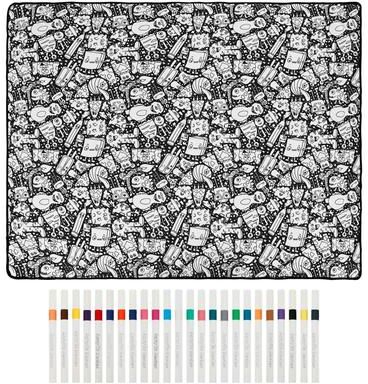
Uplift Picks DIY Coloring Blanket With 24 Markers Creative Reusable Art Throw monsterTurn cozy time into a creative activity with this DIY coloring blanket made for kids, families, and anyone who loves handson art. It includes 24 colored markers so you can personalize the printed design with your own color combinations. The soft...127,98 $*Shipping: 0,00 $Secure redirect to the provider
-
Can the titration volume be calculated without having performed the titration beforehand?
No, the titration volume cannot be accurately calculated without having performed the titration beforehand. The titration volume is determined by the amount of titrant needed to reach the equivalence point, which can only be determined through the actual titration process. The titration volume is a crucial parameter in determining the concentration of the analyte in the sample, so it is essential to perform the titration to obtain this information accurately. **
-
What does a titration curve look like when no titration is performed?
When no titration is performed, a titration curve would simply be a straight horizontal line at the initial pH of the solution being tested. This is because there would be no addition of titrant to cause any changes in pH. The curve would remain flat and unchanging until a titrant is added to initiate the titration process. **
-
What is the difference between a pH-metric titration and an indicator titration?
A pH-metric titration involves the use of a pH meter to measure the pH of a solution as a titrant is added to it. This allows for a precise determination of the equivalence point of the titration. On the other hand, an indicator titration uses a chemical indicator that changes color at or near the equivalence point to signal the end of the titration. While pH-metric titrations provide more accurate and precise results, indicator titrations are simpler and more commonly used in introductory chemistry labs. **
-
What is a back titration?
A back titration is a technique used in analytical chemistry to determine the concentration of an analyte that reacts slowly or incompletely with a direct titration method. It involves adding an excess of a known reagent to the analyte, allowing the reaction to proceed, and then titrating the excess reagent that did not react with a second titrant. By measuring the amount of the second titrant required to react with the excess reagent, the concentration of the analyte can be calculated. Back titrations are particularly useful when the analyte is volatile, weakly acidic or basic, or when there are interfering substances present. **
* All prices are inclusive of VAT and, if applicable, plus shipping costs. The offer information is based on the details provided by the respective shop and is updated through automated processes. Real-time updates do not occur, so deviations can occur in individual cases. ** Note: Parts of this content were created by AI.